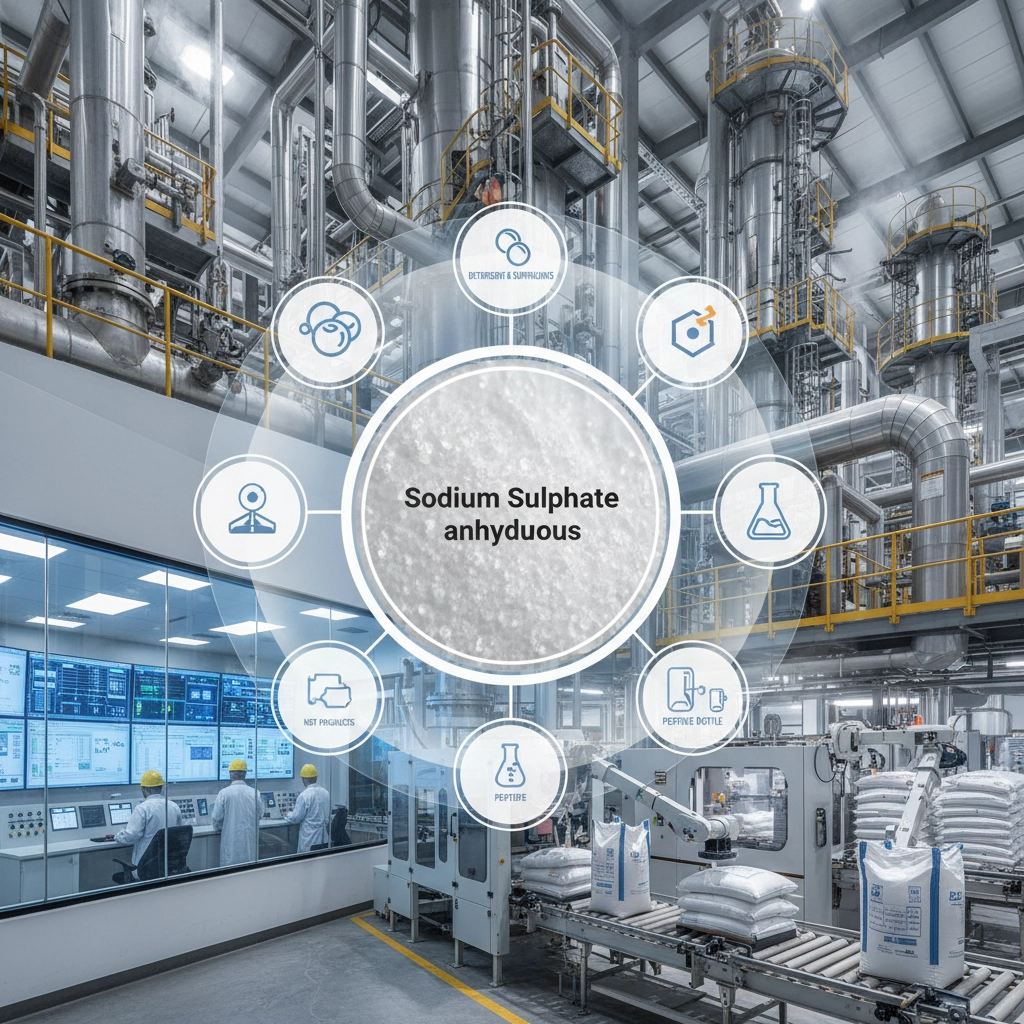
Sodium Sulphate Anhydrous is a cornerstone of the modern chemical industry, serving as a versatile inorganic compound that facilitates a vast array of manufacturing processes. From its critical role as a filler in powder detergents to its application in glass manufacturing and textile dyeing, this salt provides essential stability and chemical properties that ensure product consistency globally.
Understanding the nuances of Sodium Sulphate Anhydrous is vital for procurement managers and chemical engineers who seek to balance cost-efficiency with high purity standards. As global supply chains evolve, the demand for anhydrous forms increases due to their superior storage stability and precise dosing capabilities in industrial formulations.
By exploring the technical specifications and diverse applications of this compound, businesses can optimize their production lines and enhance the quality of their end-products. This comprehensive guide examines the global context, technical advantages, and future trajectories of Sodium Sulphate Anhydrous in the specialty chemicals sector.

Global Relevance of Sodium Sulphate Anhydrous
On a global scale, Sodium Sulphate Anhydrous is indispensable, with millions of tons produced annually to support the detergent and glass industries. According to international trade data, the stability of the sulphate market directly impacts the cost of consumer hygiene products, making it a key economic indicator in the specialty chemicals sector.
The primary challenge facing the industry is the transition toward more sustainable sourcing methods. As ISO standards for environmental management become stricter, manufacturers are under pressure to reduce the carbon footprint associated with the extraction and refining of this salt while maintaining the rigorous purity levels required for pharmaceutical and food-grade applications.
Technical Definition and Industrial Meaning
In simple terms, Sodium Sulphate Anhydrous is the water-free form of sodium sulphate (Na2SO4). Unlike the decahydrate form (Glauber's salt), the anhydrous version is a white, odorless powder that does not contain water of crystallization, which prevents clumping and ensures a more stable reaction environment in chemical synthesis.
In the context of modern industry, this compound serves as more than just a filler; it is a processing aid that controls the viscosity of liquids and ensures the even distribution of active ingredients in surfactants. Its ability to maintain a neutral pH makes it a safe and reliable choice for a wide range of sensitive chemical reactions.
From a humanitarian perspective, the availability of high-quality sodium sulphate is crucial for the production of affordable soaps and detergents in developing regions. By providing a cost-effective way to bulk up cleaning agents without compromising efficacy, it supports global sanitation and public health initiatives.
Core Components of High-Purity Sodium Sulphate Anhydrous
One of the primary factors defining the quality of Sodium Sulphate Anhydrous is its chemical purity. The absence of impurities like iron or heavy metals is critical for industries such as textile dyeing, where any contamination could lead to uneven coloring or fabric degradation.
Scalability and stability are also core components of its industrial value. Because it is anhydrous, it offers superior long-term storage capabilities compared to hydrated forms, reducing the risk of caking during transcontinental shipping and ensuring that the material remains flowable upon arrival at the factory.
Cost efficiency remains a driving force in the selection of this compound. By optimizing the particle size distribution, manufacturers can ensure that Sodium Sulphate Anhydrous blends seamlessly with other powders, reducing the energy required for mixing and decreasing the overall production cycle time.
Global Applications and Use Cases
The application of Sodium Sulphate Anhydrous spans multiple continents and sectors. In the Asia-Pacific region, it is heavily utilized in the massive detergent industry to maintain powder flowability. In Europe and North America, it is frequently employed in the paper pulping process to recover chemicals and maintain the alkaline balance of the liquor.
Beyond mass production, this compound is vital in niche industrial zones. For example, in high-precision glass manufacturing, it is used to remove air bubbles and improve the clarity of the glass. In specialized leather tanning processes, it helps in the swelling of hides, ensuring that tanning agents penetrate the skin uniformly for a high-quality finish.
Industrial Performance Ratings for Sodium Sulphate Anhydrous Variants
Advantages and Long-Term Industrial Value
The tangible benefits of utilizing Sodium Sulphate Anhydrous include significant cost reductions and enhanced reliability. By acting as an inert filler, it allows manufacturers to deliver a consistent product volume without adding expensive active ingredients, thereby lowering the price point for the end consumer while maintaining product safety.
From a logical and emotional perspective, the use of high-purity sodium sulphate builds trust between the B2B supplier and the manufacturer. Knowing that the raw material is stable and contaminant-free reduces the risk of batch failure, ensuring that the final products—whether they be detergents or medicines—are safe, effective, and consistent in their performance.
Future Trends and Innovations in Sulphate Chemistry
The future of Sodium Sulphate Anhydrous is closely tied to the "Green Chemistry" movement. Innovations are focusing on recovering sulphate salts from industrial waste streams, turning a byproduct of other chemical processes into a primary resource. This circular economy approach reduces the reliance on mining and lowers the overall environmental impact.
Digital transformation is also playing a role, with AI-driven supply chain optimization ensuring that the production of sodium sulphate is precisely aligned with global demand. This prevents overproduction and reduces the energy wasted in transporting bulk materials across long distances.
Furthermore, research into nano-structured sodium sulphate is opening new doors in the field of energy storage and heat management. By manipulating the crystal structure of the anhydrous form, scientists are exploring its potential in advanced thermal energy storage systems, potentially expanding its use far beyond traditional manufacturing.
Challenges and Solutions in Sodium Sulphate Anhydrous Supply
One of the primary challenges in the procurement of Sodium Sulphate Anhydrous is the vulnerability to logistics disruptions. As a bulk commodity, shipping costs can fluctuate wildly, impacting the final margin of detergent manufacturers. To solve this, many companies are shifting toward localized sourcing and long-term strategic partnerships with certified refineries.
Another hurdle is the strict requirement for moisture control. Even "anhydrous" products can absorb moisture from the air if packaging is compromised, leading to clumping. The solution lies in the adoption of advanced moisture-barrier packaging and climate-controlled warehousing to preserve the integrity of the salt.
Finally, meeting the diverse purity requirements of different industries requires a sophisticated quality control framework. By implementing real-time spectroscopic analysis during the production process, manufacturers can now tailor the purity levels of Sodium Sulphate Anhydrous to meet specific client needs, ranging from technical grade to ultra-pure pharmaceutical grade.
Comparative Analysis of Sodium Sulphate Anhydrous Grades and Applications
|
Product Grade
|
Purity Level (%)
|
Primary Application
|
Performance Score
|
| Industrial Grade |
98.0% - 99.0% |
Powder Detergents |
8/10 |
| Glass Grade |
99.2% - 99.7% |
Float Glass Mfg |
9/10 |
| Textile Grade |
99.0% - 99.5% |
Dyeing & Printing |
7/10 |
| Pharma Grade |
99.9%+ |
Drug Formulation |
10/10 |
| Paper Grade |
97.5% - 98.5% |
Pulp Processing |
6/10 |
| Specialty Grade |
99.5% - 99.8% |
Lab Reagents |
9/10 |
FAQS
The primary difference is the water content. Sodium Sulphate Anhydrous contains no water of crystallization, making it a stable, free-flowing powder. The decahydrate form (Glauber's salt) contains ten water molecules per formula unit, which makes it prone to melting or caking in certain temperatures. For industrial applications requiring precise weight and stability, the anhydrous form is almost always preferred.
In the detergent industry, it serves as a critical filler and processing aid. It ensures that the active surfactants and enzymes are evenly distributed in the powder, prevents the product from clumping, and provides the necessary bulk to make the powder easy for consumers to handle and pour, all without interfering with the cleaning chemical reactions.
Yes, provided it is produced to Pharma Grade specifications. High-purity Sodium Sulphate Anhydrous is used in various pharmaceutical formulations as a stabilizing agent or as part of the synthesis process. It must meet strict purity standards to ensure the absence of heavy metals and other contaminants that could compromise patient safety.
It should be stored in a cool, dry, well-ventilated area away from moisture. Because it is hygroscopic, using moisture-proof bags (such as PE-lined bags) and keeping the product off the floor on pallets is essential. Maintaining a low-humidity environment prevents the powder from absorbing water and forming hard lumps.
Yes, the industry is moving toward circular economy models. Many manufacturers now recover sodium sulphate as a byproduct from the production of viscose rayon or from the regeneration of spent acids in the chemical industry. This reduces the need for virgin mineral extraction and significantly lowers the carbon footprint of the production process.
For float glass manufacturing, a very high purity level (typically 99.2% to 99.7%) is required. Impurities, particularly iron, can cause discoloration or "seeds" (small bubbles) in the glass, which reduces the optical quality and strength of the final product. Therefore, Glass Grade Sodium Sulphate Anhydrous is strictly monitored for iron content.
Conclusion
Sodium Sulphate Anhydrous remains a fundamental pillar of the specialty chemical industry, offering unparalleled stability, cost-efficiency, and versatility. From its essential role in the mass production of hygiene products to its critical application in high-precision glass and pharmaceutical manufacturing, its impact on global commerce and daily life is profound. By balancing high purity with sustainable sourcing, the industry ensures that this compound continues to drive innovation across multiple sectors.
Looking ahead, the shift toward green chemistry and digital supply chain management will further enhance the value proposition of Sodium Sulphate Anhydrous. Companies that prioritize quality control and environmental responsibility will find the greatest long-term success. We encourage manufacturers to audit their current raw material specifications to ensure they are utilizing the optimal grade for their specific needs. For premium sourcing and technical support, visit our website: www.zjsles.com.