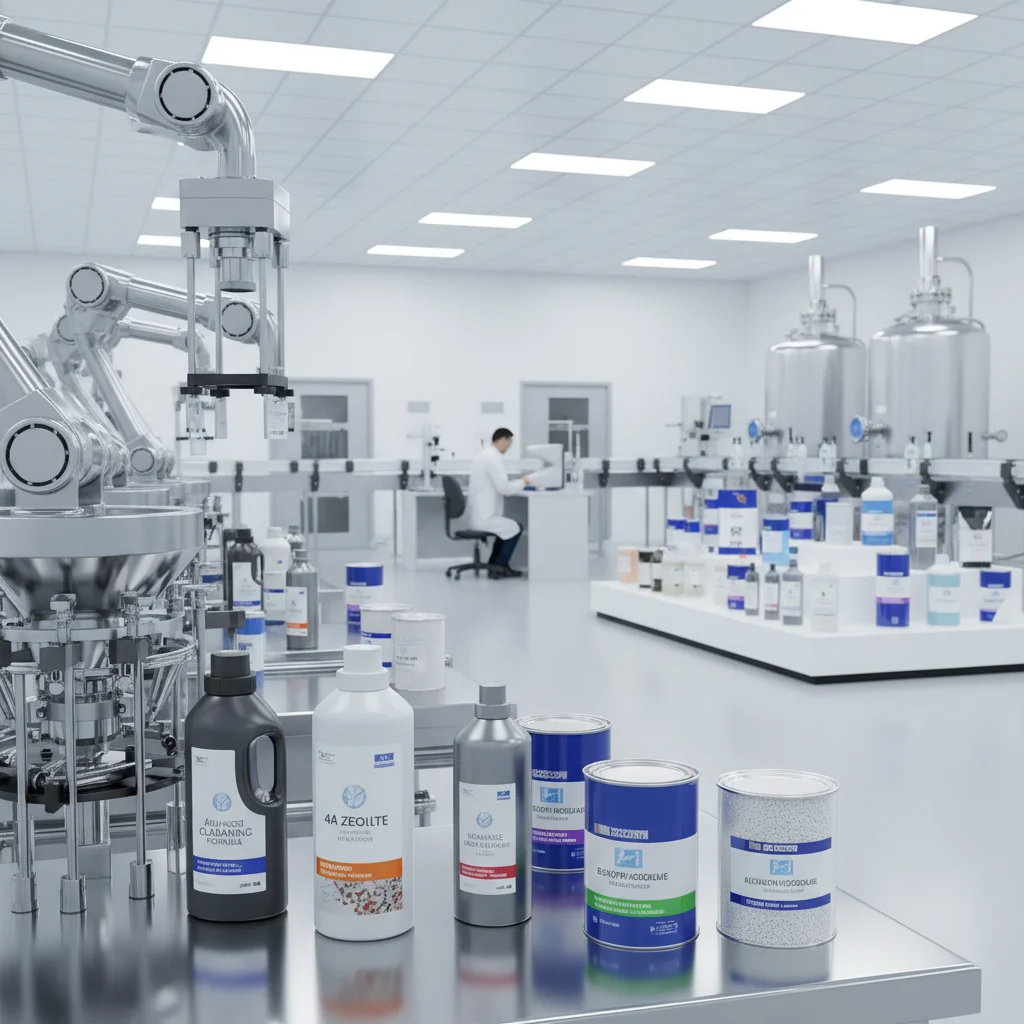
Selecting a reliable raw material source is often the most critical decision in the formulation of high-performance cleaning agents. The balance between foaming capability, skin compatibility, and decontamination efficiency depends entirely on the purity and consistency of the surfactants used.
In the current global market, procurement professionals are shifting away from generic trading companies toward direct partnerships with specialized production facilities. This transition is driven by a need for tighter quality control, lower lead times, and the ability to customize chemical specifications for specific industrial or consumer needs.
For those seeking a professional manufacturer for detergent components, understanding the technical nuances of anionic surfactants like SLES 70% is essential for maintaining product stability and cost-effectiveness.


Anionic surfactants serve as the primary active cleaning agents in the vast majority of household and industrial detergents. Their ability to reduce surface tension and emulsify fats makes them indispensable for removing stubborn grime from various surfaces.
Among these, Sodium Lauryl Ether Sulfate (SLES) is highly valued for its ability to produce rich foam while remaining soluble in water, providing a balance of decontamination and wetting properties that other chemical classes cannot match independently.
SLES 70% is a concentrated anionic surface-active agent characterized by its excellent emulsification and dispersity. Technically, it is designed to be stable in hard water, which prevents the precipitation of minerals that often plague lower-grade surfactants during the cleaning process.
From a formulation perspective, its compatibility with a wide range of other surfactants allows chemists to create "complex soaps" that combine high cleaning power with low skin irritation. This makes it a versatile base for products ranging from heavy-duty dish detergents to mild baby shampoos.
Furthermore, the biodegradability of SLES 70% ensures that it meets increasingly strict environmental regulations globally, reducing the ecological footprint of the final detergent product without sacrificing functional performance.
For large-scale production, the risk of supply interruption or batch-to-batch inconsistency can lead to costly production halts or product recalls. Relying on a manufacturer with integrated production lines is the primary way to mitigate these risks.
Direct manufacturing capabilities, such as those found in Shandong Zhongjin Chemical Co., Ltd., eliminate the intermediaries that often obscure quality certifications and extend lead times during peak seasons.
Trust is established through transparent quality assurance systems. The ability to provide pre-shipment samples and allow third-party inspections like SGS ensures that the commercial volume delivered matches the approved laboratory specifications exactly.
When comparing different grades of surfactants, procurement teams typically use a multi-dimensional index to evaluate suitability. Factors such as foaming density, solubility speed, and irritation levels are weighted based on the intended end-use of the detergent.
The following analysis represents a relative performance model for SLES 70% across five key operational metrics, highlighting why it remains a preferred choice for a professional manufacturer for detergent raw materials.
In a typical industrial setting, SLES 70% is not used in isolation but as a core active agent. For hair shampoo and bath gels, it provides the necessary viscosity and foam volume that consumers associate with quality. In the textile industry, it functions as a high-efficiency wetting agent, ensuring that dyes and finishers penetrate fabrics evenly.
For manufacturers of dish detergents, the high concentration of SLES 70% allows for the creation of potent grease-cutting formulas that remain stable during storage and transport, regardless of temperature fluctuations.
The detergent industry is currently undergoing a transition toward "green chemistry," where the focus is on reducing toxicity and enhancing environmental degradability. This shift is not merely a trend but a response to global regulatory pressures and evolving consumer consciousness.
Manufacturers are now prioritizing the development of low-pollution raw materials. This involves optimizing the ethoxylation process to reduce residual impurities, thereby creating surfactants that are gentler on the eyes and skin while remaining biodegradable.
Looking forward, the integration of energy-saving production measures is becoming a competitive advantage. Companies that implement emission-reduction strategies in their production bases are better positioned to serve the European and North American markets.
Choosing the right partner requires a structured evaluation beyond price. Procurement managers should analyze the manufacturer's ability to handle customized formulas and their capacity to scale during peak demand periods, such as the busy August-October window.
A critical differentiator is the level of quality control integrated into the production base. Certified facilities (GMP, ISO) provide a baseline of trust, but on-spot QC and the availability of free samples for verification are the true markers of a professional partner.
The following table outlines the key selection criteria used to distinguish a high-capacity manufacturer from a simple trading entity.
| Evaluation Factor | Trading Company | Direct Manufacturer | Impact on Buyer |
|---|---|---|---|
| Lead Time Control | Dependent on 3rd party | Directly controlled | Production Scheduling |
| Customization | Limited/Indirect | In-house R&D | Formula Optimization |
| Quality Assurance | Paper-based certificates | On-spot QC / SGS | Batch Consistency |
| MOQ Flexibility | High (per supplier) | Flexible (1kg-Tons) | Inventory Cost |
| Technical Support | Sales-oriented | Engineer-oriented | Problem Solving |
| Price Stability | Market-driven margins | Production-cost driven | Long-term Budgeting |
SLES 70% typically appears as a white or light yellow viscous paste. It is an anionic surfactant used primarily for its excellent decontamination, emulsification, and foaming properties. Its high concentration makes it ideal for industrial formulations of shampoos, bath soaps, and dish detergents, as well as acting as a wetting agent in the textile industry.
A professional manufacturer employs several layers of verification: experienced technical staff managing the formulation, the provision of pre-shipment samples to ensure specifications are met, and the option for third-party inspections (such as SGS). Additionally, producing in bases with GMP or ISO certifications ensures that the on-spot QC processes are standardized and repeatable.
Yes, while standard commercial MOQs are typically around 1kg, many direct manufacturers can accommodate smaller research quantities, such as 100g, provided the sample charges are covered. This allows formulators to test the compatibility of the surfactant with their specific ingredients before committing to a full-scale commercial order.
In normal seasons, production leading time is generally between 15-20 days upon receipt of the deposit. However, during peak demand periods—specifically August, September, and October—this can extend to 25-30 days. Planning orders around these seasonal fluctuations is essential for maintaining a continuous supply chain.
SLES is designed to be biodegradable and generally exhibits low irritation to the skin and eyes compared to harsher surfactants. However, because it is a concentrated active agent, it is typically diluted in final formulations. Its compatibility with other surfactants allows manufacturers to further reduce irritation levels for sensitive skin products.
For a smooth customs declaration process, a manufacturer should provide a complete set of documents, including the Bill of Lading (B/L), Commercial Invoice, Packing List, and a Certificate of Origin. These documents verify the nature of the chemical product and its origin, facilitating legal entry into the destination country.
The efficiency of a cleaning product is fundamentally tied to the quality of its surfactants. Moving toward a direct partnership with an experienced manufacturer allows for greater control over technical specifications, ensuring that every batch of SLES 70% delivers the required foaming and decontamination performance.
As the industry evolves toward sustainable and green chemistry, the role of the manufacturer extends beyond mere production to becoming a technical partner in formulation optimization. By focusing on stability, transparency, and environmental compliance, brands can secure a competitive edge in a demanding global market.