When formulating high-performance cleaning agents, the choice of surfactant often determines the balance between aggressive soil removal and skin compatibility. For many industrial manufacturers, finding a reliable Sodium Laureth Sulfate Company that provides consistent active content and purity is the primary challenge in maintaining product stability across different batches. The technical demand has shifted from simple foam generation to a requirement for high biodegradability and stable performance in varying water hardness levels.
The integration of anionic surfactants into Detergent & Surfactants, Hot Products, mercury, peptide formulations requires a precise understanding of chemical synergy. In the context of personal care and industrial degreasing, the ability of a surfactant to maintain a rich, stable foam while remaining non-toxic is not just a preference but a regulatory necessity. This is where the specific properties of Sodium Alpha Olefin Sulfonate (AOS) become critical, offering a milder alternative to traditional sulfates without sacrificing cleaning power.
To navigate the complexities of chemical procurement and formulation optimization, buyers must evaluate suppliers based on certification standards and technical support capabilities. This analysis explores the technical specifications and application logic of premium surfactants, providing a professional framework for those sourcing from a Sodium Laureth Sulfate Company to ensure their final products meet both industrial efficiency and environmental sustainability standards.


Sodium Alpha Olefin Sulfonate (AOS) is produced through the precise sulfonation of α-olefins, resulting in an anionic surfactant that is highly valued for its exceptional foaming capabilities and superior cleaning efficacy. Unlike some traditional surfactants, AOS provides critical emulsifying, wetting, and dispersing properties that ensure stable foam and efficient dirt removal. This chemical structure allows it to operate effectively as a primary cleaning agent in various concentrations.
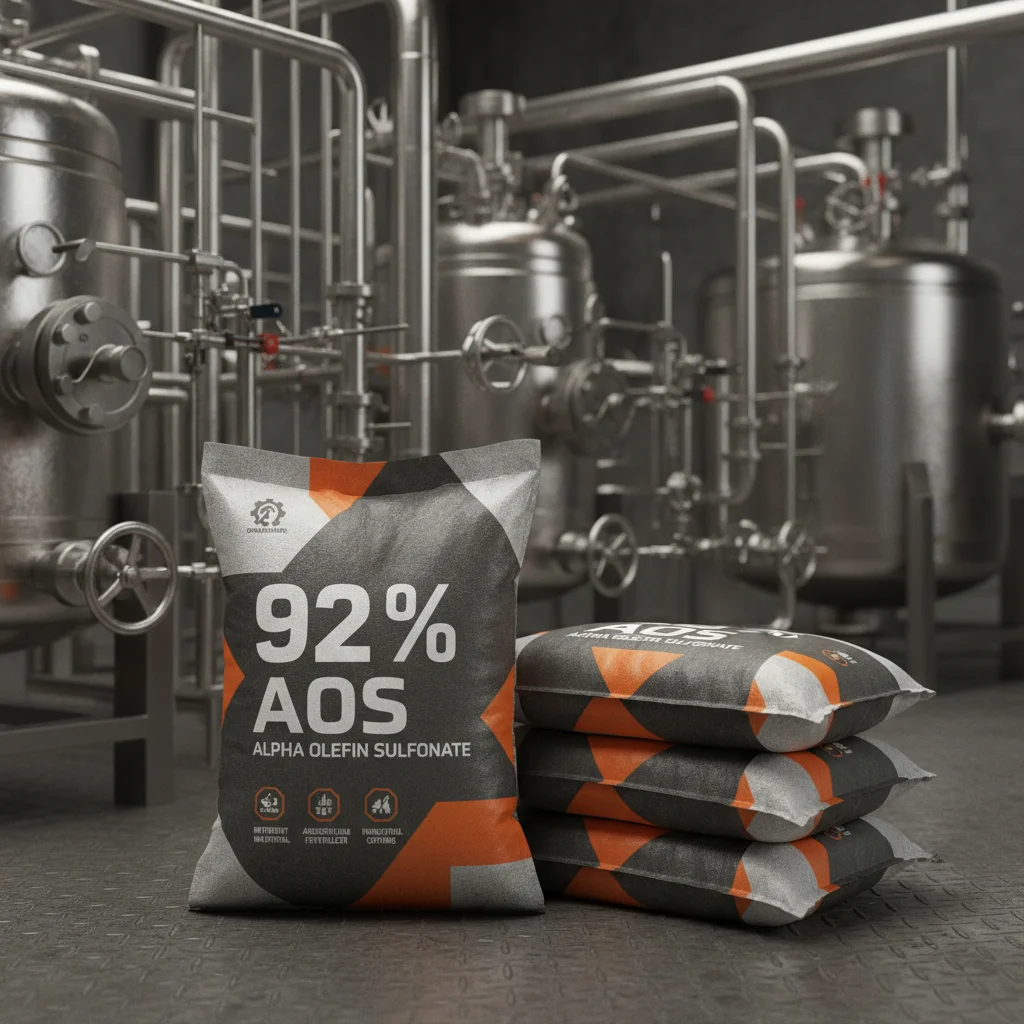
From a technical perspective, the versatility of AOS lies in its available forms: a highly concentrated powder with ≥ 92% active content and a convenient liquid form with ≥ 30% active content. This flexibility allows manufacturers to adapt their production process based on whether they are creating dry detergent powders or liquid soap formulations. The high active content in the powder form reduces logistics costs and allows for more precise dosage control during large-scale manufacturing.
The performance of a surfactant is largely determined by its active content and purity levels. For instance, in powder form, an active content of 92% or higher is essential for ensuring that the resulting detergent has sufficient cleaning power without requiring excessive amounts of raw material. Purity is equally important; the presence of unreacted olefins or residual salts can lead to instability in the final product, affecting clarity and shelf-life.
The core value of AOS lies in its stable performance across both hard and soft water environments, preventing the precipitation of minerals that typically degrades the foaming ability of lower-grade anionic surfactants.
Furthermore, biodegradability is a non-negotiable factor in modern chemical manufacturing. Because AOS is fully biodegradable and safe for aquatic life, it aligns with global green chemistry standards. This environmental compatibility, combined with low toxicity and irritation levels, makes it a preferred choice for companies aiming to reduce their ecological footprint while maintaining high industrial degreasing standards.
One of the most difficult balances to achieve in surfactant chemistry is the intersection of powerful degreasing and dermatological mildness. High-efficiency industrial cleaners often strip the skin of natural oils, leading to irritation. However, AOS is engineered to be gentle on skin and hair, making it perfectly suited for premium personal care and facial cleanser formulations without sacrificing its ability to remove stubborn oils.
By utilizing the low-irritation properties of AOS, manufacturers can create "skin-friendly" labels that are backed by actual chemical performance rather than just marketing claims.
This mildness is particularly relevant when AOS is integrated into multi-functional products where it must coexist with other active ingredients like peptides or specialized detergents. The ability to maintain a stable, rich foam without causing redness or dryness allows for the development of high-end cosmetic products that satisfy both professional dermatologists and industrial quality controllers.
Choosing between AOS powder and liquid depends entirely on the production infrastructure and the final product form. Powdered AOS is the gold standard for dry detergent manufacturing due to its maximized concentration, which significantly lowers storage costs and shipping volumes. It allows for a higher degree of precision in formulation, as the active content is concentrated and stable.
Conversely, liquid AOS is preferred for rapid integration into liquid-based products such as shampoos or liquid dish soaps. While the storage volume is higher due to the 30% active content, the instant integration eliminates the need for a dissolution phase, reducing energy consumption during the mixing process and speeding up production cycles.
The versatility of AOS extends far beyond simple soap. In the oilfield extraction sector, it serves as a critical emulsifier to maintain the flow of hydrocarbons. In agriculture, it is utilized as a pesticide spreading agent, ensuring that active chemicals adhere evenly to leaf surfaces and penetrate target areas more effectively, thereby increasing the overall yield of the crop protection process.
Within the textile industry, AOS is indispensable for fabric scouring, where it removes natural waxes and impurities from raw fibers before dyeing. This wide array of applications demonstrates that a high-quality surfactant is not just a cleaning agent but a functional additive that optimizes industrial processes in metallurgy, electronics, and pharmaceutical manufacturing.
The chemical industry is moving toward a "zero-impact" philosophy, where the biodegradability of raw materials is the primary metric of success. The shift toward AOS and similar anionic surfactants is driven by the need to replace older, persistent chemicals that accumulate in aquatic ecosystems. Future innovations are likely to focus on further reducing the energy required for sulfonation while increasing the active purity of the final product.
Sustainable development in this sector also involves the implementation of closed-loop production systems. By optimizing the sulfonation process to reduce byproduct waste, manufacturers can lower the overall cost of production while adhering to REACH and ISO certifications. This transition ensures that high-performance cleaning does not come at the cost of environmental degradation.
As regulatory bodies tighten restrictions on non-biodegradable surfactants, the demand for verified eco-friendly materials will grow. Companies that invest in certified quality assurance, including SGS inspections for every batch, will be better positioned to supply the global market, particularly in regions with strict ecological mandates like Europe and North America.
One of the most persistent challenges in detergent formulation is the presence of calcium and magnesium ions in hard water, which often causes surfactants to precipitate, resulting in "soap scum" and a loss of foaming power. AOS is specifically engineered to resist this phenomenon, maintaining a consistent cleaning efficacy regardless of water hardness.
To optimize the use of AOS, formulators often combine it with secondary surfactants to create a synergistic effect. This not only enhances the foam stability but also allows for a reduction in the total amount of active surfactant needed, lowering the cost per unit while improving the user experience in terms of rinse-ability and skin feel.
Evaluating the investment return when choosing between different surfactant grades requires a look at the total cost of ownership, including shipping, mixing time, and the final product's market value. The following table provides a clear comparison of the two primary forms of AOS to assist in procurement decision-making.
| Feature | AOS Powder (92%) | AOS Liquid (30%) | Operational Impact |
|---|---|---|---|
| Concentration | Ultra-High | Standard Diluted | Powder reduces waste |
| Mixing Speed | Requires Dissolution | Instant Integration | Liquid saves time |
| Storage Cost | Low (Compact) | Higher (Volume) | Powder saves space |
| Dosage Control | Precise Weight | Approximate Flow | Powder is more exact |
| Primary Use | Dry Detergents | Liquid Soaps | Application dependent |
| Eco-Footprint | Lower Shipping | Higher Shipping | Powder is greener |
AOS is widely used in personal care (shampoos, body washes), home care (dishwashing liquid, laundry detergents), oilfield extraction as an emulsifier, agriculture for pesticide spreading, and the textile industry for fabric scouring. Its ability to provide stable foam and effective degreasing across these diverse sectors makes it a versatile industrial tool.
Being fully biodegradable, AOS reduces the environmental footprint of the final product, ensuring compliance with strict ecological regulations and making it safe for aquatic environments. This allows manufacturers to meet "Green Chemistry" standards without compromising on the cleaning power required for industrial-grade applications.
AOS Powder (≥ 92%) is preferred for powdered detergents because it allows for precise concentration control and is significantly easier to handle in dry bulk manufacturing processes. Additionally, it lowers shipping and storage costs due to its ultra-high active content compared to liquid forms.
Yes, one of the core strengths of AOS is its stable performance in both hard and soft water. It maintains high cleaning efficacy and foam stability without precipitation, which is a common failure point for other anionic surfactants when exposed to high mineral content.
Professional suppliers should hold ISO9001:2008, REACH, and FAMIQS certifications to ensure global standard compliance. Furthermore, every batch should be validated by independent SGS inspection to guarantee that the active content levels (e.g., ≥ 92% for powder) are accurate and the product is pure.
Yes, AOS is valued for its relative mildness compared to other strong anionic surfactants. This makes it suitable for facial cleansers and premium personal care products that require a gentle touch on the skin while still needing to effectively remove oil and impurities.
Selecting the right surfactant is a strategic decision that impacts product quality, environmental compliance, and cost-efficiency. Sodium Alpha Olefin Sulfonate (AOS) stands out as a superior choice for those requiring a balance of industrial-strength cleaning and dermatological mildness. By understanding the technical differences between powder and liquid forms, and ensuring a supply chain backed by ISO and REACH certifications, manufacturers can ensure their products remain competitive in a market that increasingly demands sustainable and skin-friendly solutions.
For enterprises looking to optimize their detergent or industrial cleaning formulations, partnering with a technically proficient supplier is essential. Whether you require high-concentration powders for cost-efficient bulk production or liquid forms for rapid integration, professional guidance on active content and compatibility can prevent costly formulation errors. To explore premium surfactant solutions tailored to your specific industrial needs, you may visit www.zjsles.com for detailed technical support and procurement options.