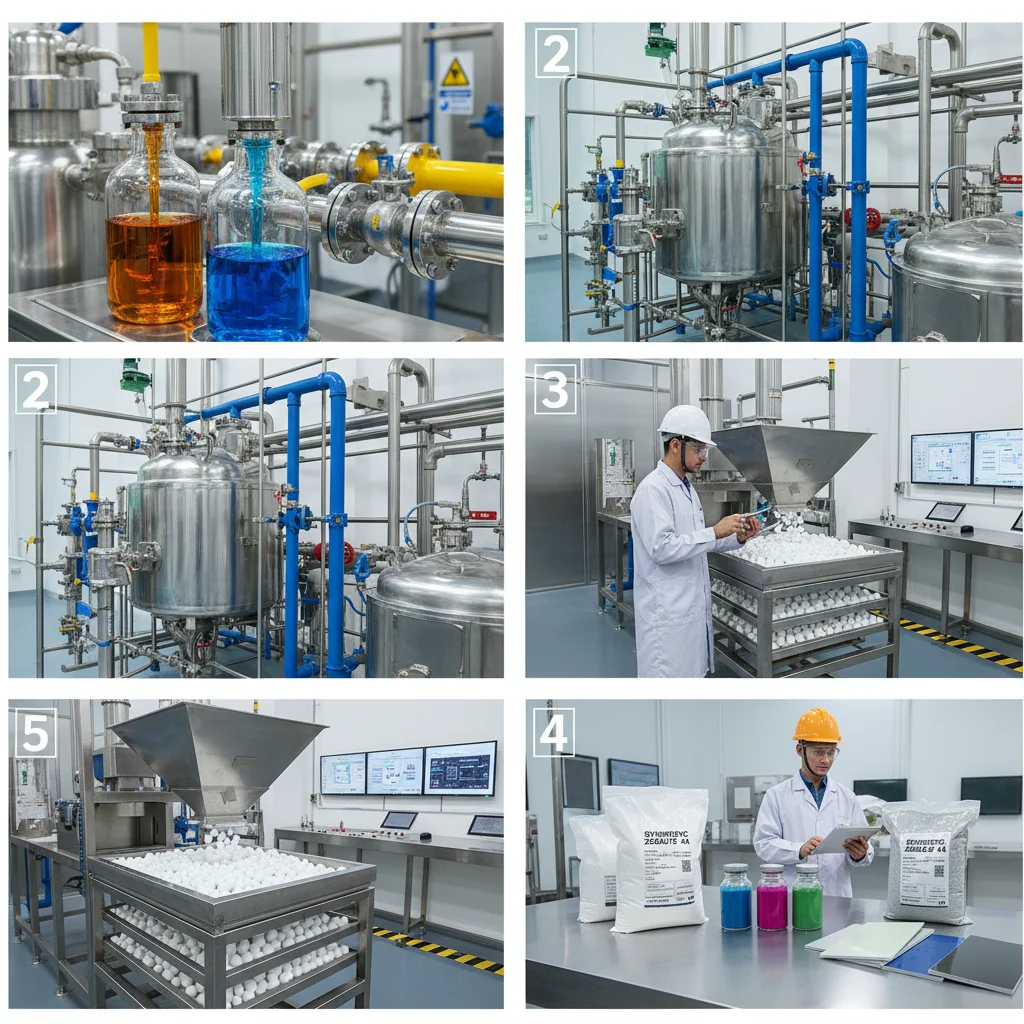
In the complex world of industrial surfactants, few components are as foundational as Linear Alkylbenzene Sulfonic Acid, commonly known as LABSA. As a high-purity anionic surfactant precursor, it serves as the essential chemical building block for a vast array of cleaning agents used globally. Understanding its chemical nature and transformation process is critical for manufacturers aiming to balance raw material costs with high-performance cleaning efficacy.
The global demand for efficient hygiene solutions has propelled LABSA into a position of unmatched importance. From heavy-duty industrial degreasers to the everyday laundry powders found in millions of households, this precursor provides the necessary chemical architecture to emulsify oils and lift stubborn grime. Its role as a cost-performance leader ensures that high-quality cleaning is accessible across different economic strata worldwide.
For procurement managers and formulation chemists, selecting a high-grade LABSA 96% is the first step toward creating a stable, effective, and environmentally compliant product. By mastering the neutralization process and understanding the linear chain structure, businesses can optimize their supply chains while meeting stringent international regulatory standards.

Understanding the Chemical Nature of LABSA
LABSA 96% is a high-purity anionic surfactant precursor. In its raw, acidic form, it is not yet surface-active, meaning it cannot remove dirt on its own. To unlock its cleaning potential, it must undergo a neutralization reaction with a base, such as caustic soda (NaOH) or triethanolamine (TEA). This chemical conversion transforms the acid into its active salt form, Linear Alkylbenzene Sulfonate (LAS), which is the actual agent responsible for cleaning.
This two-step process—sulfonation to create the acid and neutralization to create the salt—allows manufacturers immense control over the final product's pH and characteristics. Because it is delivered as a concentrated 96% acid, it is highly efficient for transport and storage, reducing the overall logistical footprint for large-scale detergent manufacturing.
The Mechanism of Unmatched Cleaning Power
The primary value of the resulting LAS molecules lies in their unique amphiphilic structure. Each molecule consists of a hydrophobic "tail" that attracts oil and grease, and a hydrophilic "head" that attracts water. This dual nature allows the surfactant to bridge the gap between oil-based stains and water-based cleaning solutions.
When applied to a surface, the hydrophobic tails attach themselves to greasy stains, mineral oils, and particulate dirt. As the water flows over the surface, the hydrophilic heads pull the oil-tail complex away from the material, emulsifying the grime into tiny droplets. This process suspends the dirt in the water, preventing it from re-depositing on the surface and allowing it to be rinsed away easily.
This mechanism is why LABSA-derived surfactants are the gold standard for heavy-duty applications. Whether it is removing industrial lubricants from machinery or lifting organic fats from kitchenware, the emulsification power provided by the linear alkyl chain is exceptionally difficult to match at a comparable cost.
Formulation Versatility and Process Stability
One of the most significant technical advantages of using LABSA is its adaptability across different product formats. It is a robust raw material that can be integrated into liquid soaps, gels, and most importantly, powdered detergents. Its stability ensures that the final product remains effective throughout its shelf life.
The stability of LABSA is particularly evident in the production of powdered detergents, where it must withstand the extreme conditions of spray-drying towers. Because it is highly resistant to heat, it does not decompose during the rapid evaporation process, ensuring that the active cleaning agent remains potent in the final powder granules.
Furthermore, manufacturers can fine-tune the performance of their products by adjusting the inclusion rate. For instance, a formulation for low-foam machine laundry powder typically uses an inclusion rate of approximately 8% LABSA. This allows for a powerful clean without creating excessive suds that could damage automatic washing machines, demonstrating the material's precise controllability.
Economic Value and Cost-Performance Analysis
In the global surfactant market, the "cost-performance ratio" is the most critical metric for manufacturers. LABSA consistently outperforms other precursors because it provides high-level cleaning efficacy while maintaining a relatively low production cost. This allows brands to offer premium cleaning power at a competitive retail price.
By utilizing a single primary raw material across multiple product lines—from industrial degreasers to household dish liquids—companies can significantly streamline their supply chains and reduce procurement complexity, further enhancing the economic viability of their operations.
Comparative Performance Rating of LABSA Derivatives
Environmental Compliance and Biodegradability
Modern chemical manufacturing is defined by its environmental footprint. The sustainability of LABSA is directly tied to its molecular structure, specifically the linearity of its alkyl chain. Linear structures are far more susceptible to microbial breakdown in wastewater treatment plants compared to the branched structures used in older generations of surfactants (such as ABS).
To ensure compliance with strict international laws, such as the EU Directive 91/173/EEC, the branched chain isomer content must be strictly controlled to ≤ 1.5%. This high level of linearity ensures that the resulting cleaning products are readily biodegradable, minimizing persistence in aquatic environments and making it a responsible choice for the modern eco-conscious market.
Critical Handling and Neutralization Protocols
Because it is a strong acid, LABSA requires rigorous safety protocols during handling and processing. Storage must be in corrosion-resistant containers, and personnel must use appropriate personal protective equipment (PPE) to avoid chemical burns. The most critical technical phase is the neutralization step, which requires precise stoichiometric calculations to ensure product safety.
The standard industry ratio for neutralization is approximately 1:0.17. This means that for every 100 kg of LABSA, 17 kg of caustic soda (NaOH) is typically required to achieve a neutral pH. Precision in this measurement is non-negotiable; any deviation can lead to significant failures in the final formulation.
Failure to achieve complete neutralization can result in residual acidity. This not only leads to formulation instability and the potential corrosion of plastic packaging but, more critically, can cause skin irritation for the end consumer. Therefore, robust quality control during the sulfonation and neutralization process is the only way to ensure a safe, high-quality product.
Industrial Applications and Market Integration
The application of LABSA spans an incredible breadth of industries. In the household sector, it is the primary active ingredient in laundry powders and dishwashing liquids. In the industrial sector, its ability to emulsify mineral oils makes it indispensable for high-performance degreasers used in automotive and aerospace maintenance.
From a market perspective, LABSA acts as a stabilizer for manufacturers. Because it is a commodity chemical with well-established production routes, it provides a reliable baseline for cost forecasting. Companies can create tiered product lines—economy, standard, and premium—simply by adjusting the LABSA concentration and adding secondary surfactants.
As global hygiene standards rise, particularly in emerging markets, the integration of LABSA into local manufacturing allows for the rapid deployment of affordable cleaning solutions. Its versatility ensures it remains relevant regardless of whether the end-product is a liquid concentrate or a spray-dried powder.
Comparative Analysis of LABSA Application Parameters
| Application Type |
Typical Inclusion Rate |
Primary Function |
Performance Score (1-10) |
| Laundry Powder |
8% - 15% |
Soil Removal |
9 |
| Dishwashing Liquid |
10% - 20% |
Grease Emulsification |
8 |
| Industrial Degreaser |
15% - 30% |
Heavy Oil Lifting |
10 |
| Liquid Detergent |
5% - 12% |
General Cleaning |
7 |
| Machine Powder |
~8% |
Low-Foam Cleaning |
8 |
| Multi-Purpose Cleaner |
3% - 7% |
Surface Tension Reduction |
6 |
FAQS
LABSA (Linear Alkylbenzene Sulfonic Acid) is the acid precursor. In this state, it is not surface-active. LAS (Linear Alkylbenzene Sulfonate) is the active salt produced after LABSA has been neutralized with a base like caustic soda. Essentially, LABSA is the raw material, and LAS is the active cleaning agent used in the final product.
The linear structure of the alkyl chain allows bacteria in the environment to break down the molecule more efficiently. Older, branched surfactants (ABS) were not readily biodegradable and led to foam build-up in rivers. LABSA, with a branched content of ≤ 1.5%, complies with modern environmental directives like EU 91/173/EEC.
The standard stoichiometric ratio is approximately 1:0.17. For every 100 kg of LABSA 96%, you typically need 17 kg of pure caustic soda (NaOH). This ratio may vary slightly depending on the purity of the raw materials, so pH testing during the process is essential to ensure complete neutralization.
No. In its acid form, LABSA is not a surfactant and will not provide cleaning power. Furthermore, as a strong acid, it would be far too corrosive for use in consumer products, potentially causing severe skin burns and damaging fabrics or surfaces. Neutralization is a mandatory step for safety and functionality.
LABSA is highly heat-resistant and stable, making it ideal for the spray-drying process used to create detergent powders. Unlike some other surfactants that might decompose or lose efficacy under high heat, LABSA maintains its integrity, ensuring the resulting powder is both stable and powerful.
Imprecise neutralization can lead to two problems: residual acidity or excessive alkalinity. Residual acidity can cause the product to separate, corrode packaging, or irritate the user's skin. Excessive alkalinity can also be harsh on fabrics and skin. Strict quality control is required to hit the target neutral pH.
Conclusion
LABSA 96% stands as a cornerstone of the global cleaning industry, offering an unparalleled combination of cleaning power, formulation flexibility, and economic efficiency. By serving as the precursor to LAS, it enables the creation of everything from high-end industrial degreasers to affordable household laundry soaps, all while meeting modern biodegradability standards. The key to its success lies in the precision of its neutralization and the linearity of its chemical structure.
As the industry moves toward more sustainable and high-efficiency chemistry, the role of high-purity precursors will only grow. For manufacturers, the focus should remain on strict quality control and optimized stoichiometric ratios to maximize the value of this essential surfactant. To source high-grade raw materials and optimize your formulations, visit our website: www.zjsles.com