Selecting a surfactant precursor often comes down to a critical trade-off between aggressive cleaning power and strict environmental compliance. For manufacturers of heavy-duty detergents, the goal is to displace fats and mineral oils without compromising the biodegradability of the final formulation.
In the current regulatory climate, the shift toward linear alkyl chains has transformed how procurement teams evaluate raw materials. The transition from branched-chain sulfonates to linear alternatives is no longer just a trend but a requirement for accessing global markets, particularly under REACH and EU regulations.
To optimize cost-performance ratios in industrial cleaning agents, professionals often look to Buy LABSA and its sodium salt derivatives, such as SDBS/LAS 60%, to ensure stability during complex manufacturing processes.


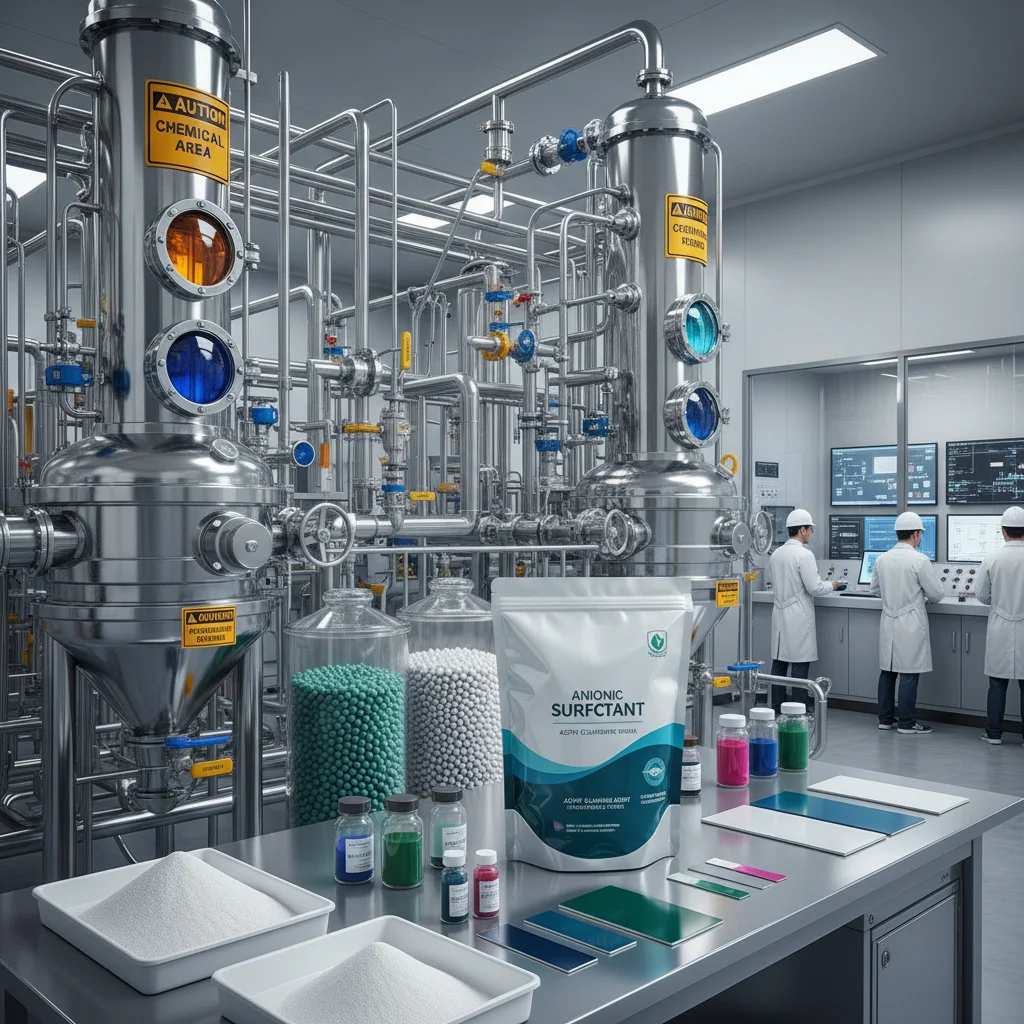
SDBS/LAS 60% operates as an anionic surfactant precursor supplied as a sodium salt. Unlike raw sulfonic acids, this form requires no further neutralization for primary applications, simplifying the production line for smaller-scale formulators. With an active matter content of ≥60%, it provides a concentrated source of cleaning power.
The effectiveness of the molecule is rooted in its dual nature: a powerful hydrophobic tail that attaches to oils and a hydrophilic head that remains soluble in water. This structure allows the surfactant to emulsify stubborn soils, pulling them away from surfaces and suspending them in the wash liquor for complete removal.
The primary value of Linear Alkylbenzene Sulfonate (LAS) derivatives lies in their unmatched ability to tackle oil-based stains. In industrial environments, mineral oils and heavy greases form tenacious bonds with surfaces. The molecular architecture of SDBS efficiently penetrates these layers, reducing interfacial tension and displacing the contaminants.
Performance is further influenced by the active matter percentage. A concentration of 60% or higher ensures that the formulation maintains high detergency even when diluted in large volumes of water. This makes it a "workhorse" ingredient for laundry powders and heavy-duty liquid detergents where cost-per-wash is a critical KPI.
Furthermore, the solubility profile of this sodium salt allows it to form a stable colloidal solution rapidly. This ensures that the cleaning agent is uniformly distributed throughout the cleaning medium, preventing "spotting" or uneven cleaning in large-scale industrial wash tanks.
Manufacturing powdered detergents involves demanding thermal conditions, particularly during the spray-drying phase. Many surfactants degrade or volatilize when exposed to high heat, but SDBS/LAS 60% is engineered for high thermal tolerance.
Thermal stability in surfactant precursors is critical for preventing product discoloration and maintaining active matter potency during the granulation process of powdered detergents.
For manufacturers targeting low-foam machine laundry powders, precise inclusion rates are essential. A typical concentration of 8% to 12% provides robust cleaning performance while ensuring that sudsing remains controlled, preventing overflow in modern high-efficiency washing machines.
When comparing surfactants, the balance between cleaning power and manufacturing cost is the primary metric. SDBS/LAS 60% often outperforms alternative anionic surfactants in terms of the "cost-to-cleaning" ratio, particularly in heavy-duty applications where high volumes of material are required.
The following index illustrates the relative performance of SDBS/LAS 60% across different critical operational parameters compared to generic alternatives.
In a typical industrial setting, such as a vehicle maintenance facility or a factory floor, degreasers must break down mineral oils quickly. SDBS/LAS 60% is integrated into these formulations to act as the primary emulsifier. Its ability to displace grease allows the cleaning solution to penetrate deep into the pores of metal surfaces.
Manufacturers evaluating this precursor must consider the acid value—typically between 190 and 200 mg KOH/g—as this is critical for stoichiometric calculations when further chemical modifications or specialized neutralizing agents are added to the blend.
The chemical structure of alkyl sulfonates determines their environmental fate. Historically, branched-chain Alkylate Sulfonates (CAS 68411-30-3) were common due to their strength, but they exhibit poor biodegradability, leading to accumulation in aquatic ecosystems.
Modern regulations, including the EU Detergent Regulation and REACH, have largely restricted these branched chains. The industry has shifted toward Linear Alkylbenzene Sulfonates (LAS), specifically the linear chain SDBS (CAS 25155-30-0), which is readily biodegradable and complies with global safety standards.
This shift represents a transition from purely performance-driven chemistry to "responsible chemistry." Companies like Shandong Zhongjin Chemical Co., Ltd. align their production with these green chemistry principles, ensuring that high-performance cleaning doesn't come at the cost of ecological stability.
Procuring surfactants requires more than just price comparison; it necessitates a technical audit of the active matter and the molecular structure. When looking to Buy LABSA or SDBS, the "Linear" specification is the most critical quality check for environmental compliance.
A secondary consideration is the physical form. While liquids are easier to pump, granules or powders (like SDBS/LAS 60%) are preferred for powdered detergent production due to their ease of integration into dry blends and higher stability during storage.
The following framework helps procurement managers assess the suitability of SDBS/LAS 60% against different manufacturing requirements.
| Evaluation Factor | Technical Requirement | SDBS/LAS 60% Status | Industrial Impact |
|---|---|---|---|
| Active Matter | ≥ 60% | Compliant | Higher concentration, lower shipping costs |
| Chain Structure | Linear (CAS 25155-30-0) | Compliant | REACH/EU biodegradability compliance |
| Thermal Stability | High Heat Tolerance | Excellent | Suitable for spray-drying processes |
| Physical Form | White Granules/Powder | Compliant | Ideal for powder granulation |
| Solubility | Rapid Water Dissolution | High | Efficient colloidal solution formation |
| Acid Value | 190 - 200 mg KOH/g | Standard | Precise stoichiometric modification |
Linear Alkylbenzene Sulfonates (LAS), such as SDBS (CAS 25155-30-0), are designed with a straight carbon chain that microorganisms can easily break down, making them readily biodegradable. Branched-chain sulfonates (CAS 68411-30-3) have complex structures that resist biological degradation, leading to environmental persistence. Consequently, global regulations like REACH and EU Detergent laws now mandate the use of linear chains to protect aquatic ecosystems.
SDBS/LAS 60% provides a high concentration of active matter in a stable, granular form. Its key advantage is its thermal stability, which allows it to withstand the intense heat of spray-drying towers used in powder production without decomposing. This ensures that the final detergent powder maintains its full detergency potency and consistent color, while its rapid solubility allows it to activate quickly once it hits the laundry water.
The most critical parameters include the active matter percentage (should be ≥60% for high-performance grades), the chain linearity (must be linear for environmental compliance), and the acid value (typically 190-200 mg KOH/g). Additionally, the physical appearance should be consistent white granules or powder, and the product should demonstrate rapid solubility in water to form a clear colloidal solution without excessive clumping.
Yes, it is highly suitable for low-foam formulations. While LAS is naturally a powerful foaming agent, its sudsing can be controlled through precise formulation. In typical machine laundry powders, an inclusion rate of 8% to 12% is recommended. This range provides the necessary cleaning power to remove oils and minerals while preventing excessive foam buildup that could interfere with the mechanical action of modern high-efficiency washing machines.
The sodium salt form (SDBS) is essentially a pre-neutralized version of the sulfonic acid. This is advantageous for manufacturers because it eliminates the need for a separate neutralization step using caustic soda (NaOH) during the mixing process. This reduces the risk of chemical burns, simplifies the production equipment requirements, and lowers the overall processing time, making it a more cost-effective and safer choice for many formulators.
The hydrophobic tail of the SDBS molecule is "water-fearing" but "oil-loving." When the surfactant is added to water, these tails seek out non-polar substances like fats, greases, and mineral oils. They embed themselves into the oil droplet, while the hydrophilic head remains in the water. This creates a micelle structure that lifts the oil away from the surface and emulsifies it into the water, allowing the soil to be rinsed away completely.
SDBS/LAS 60% remains a foundational component of the global cleaning industry because it successfully bridges the gap between aggressive industrial performance and ecological responsibility. By prioritizing linear alkyl chains and high active matter content, manufacturers can produce heavy-duty detergents that are both efficient and compliant with international standards.
As the industry moves toward greener chemistry, the ability to source stable, biodegradable, and cost-effective precursors will define the competitiveness of detergent brands. Selecting a supplier with a commitment to technical precision and environmental safety ensures a stable supply chain for high-value cleaning products worldwide.