CAPB, or Cocamidopropyl Betaine, is a versatile amphoteric surfactant widely utilized across diverse industries, from personal care to industrial cleaning. Its mildness, excellent foaming properties, and ability to enhance viscosity make it a cornerstone ingredient in countless formulations. Understanding CAPB is crucial for formulators, manufacturers, and consumers alike, enabling informed decisions regarding product selection and development. The global demand for mild and sustainable surfactants is driving innovation in CAPB production and applications, positioning it as a key component in the future of surfactant technology.
The relevance of CAPB extends beyond simply cleaning; it's intricately linked to public health and safety. As regulations surrounding harsh chemicals become increasingly stringent, CAPB offers a compelling alternative, minimizing skin irritation and environmental impact. The United Nations Sustainable Development Goals, particularly those relating to clean water and sanitation, are indirectly supported by the adoption of milder surfactants like CAPB. Furthermore, the ISO standards for cosmetic and detergent ingredients heavily influence CAPB quality control and production practices.
The increasing awareness of ingredient safety and environmental responsibility presents both a challenge and an opportunity for the surfactant industry. CAPB addresses this directly, providing a balance between efficacy and mildness, meeting the evolving needs of a conscious consumer base.

Defining CAPB and its Significance
CAPB is a zwitterionic surfactant derived from coconut oil, making it a renewable resource-based ingredient. It’s chemically classified as an amphoteric surfactant, meaning it exhibits both anionic and cationic properties depending on the pH of the solution. This unique characteristic contributes to its exceptional compatibility with other surfactants, enhancing their performance and overall formulation stability. CAPB is favored due to its gentle nature, making it ideal for products intended for sensitive skin.
The significance of CAPB stems from its ability to address key challenges in the surfactant industry: balancing cleaning efficiency with mildness and sustainability. Its widespread adoption reflects a growing demand for ingredients that minimize irritation, reduce environmental impact, and meet increasingly stringent regulatory standards. This makes CAPB not just a chemical compound, but a pivotal component in creating safer, more effective, and eco-conscious products.
Global Context of CAPB Usage
The global surfactant market is a multi-billion dollar industry, and CAPB holds a significant share, particularly within the personal care sector. Asia-Pacific represents the largest consumer of surfactants globally, driven by a growing population and increasing disposable incomes. North America and Europe also represent substantial markets, with a strong emphasis on sustainable and eco-friendly alternatives. The demand for CAPB is steadily rising in these regions as consumers prioritize products with milder formulations.
Data from market research firms like Grand View Research indicates a consistent growth trajectory for amphoteric surfactants like CAPB, projected to continue in the coming years. This growth is fuelled by increasing awareness regarding the harmful effects of traditional surfactants like Sodium Lauryl Sulfate (SLS) and Sodium Laureth Sulfate (SLES). CAPB, as a milder alternative, is positioned to capture a larger market share.
The challenge lies in ensuring a consistent and sustainable supply of CAPB, particularly as demand increases. Manufacturers are actively investing in improved production processes and exploring alternative sourcing options to address potential supply chain vulnerabilities and environmental concerns associated with coconut oil production.
Understanding the Chemical Composition of CAPB
Chemically speaking, CAPB is derived from the reaction of dimethylaminopropylamine with fatty acids, primarily those found in coconut oil. This process yields a compound with a quaternary ammonium group, contributing to its cationic properties, and a carboxylate group, providing its anionic characteristics. This amphoteric nature allows CAPB to function effectively across a broad pH range, making it a versatile ingredient.
The purity and consistency of CAPB are critical factors influencing its performance. Variations in the fatty acid composition of the coconut oil source can impact the resulting CAPB's characteristics, such as viscosity and foaming properties. Therefore, rigorous quality control measures are essential during the manufacturing process to ensure a standardized product.
Understanding the chemical structure of CAPB is vital for formulators seeking to optimize its performance within a specific application. Its compatibility with a wide range of other ingredients allows for the creation of synergistic formulations, enhancing overall product efficacy and stability.
Key Characteristics of CAPB Performance
CAPB exhibits several key characteristics that make it a highly desirable surfactant. Firstly, its mildness is paramount; it's significantly less irritating to skin and eyes compared to many traditional surfactants, making it suitable for baby products, sensitive skin formulations, and personal hygiene items. Secondly, it displays excellent foaming properties, creating rich, stable foams that enhance the sensory experience of products like shampoos and body washes.
Furthermore, CAPB acts as a viscosity builder, helping to thicken formulations and improve their texture. It also enhances the detergency of other surfactants, improving cleaning efficacy. Its compatibility with anionic, cationic, and non-ionic surfactants broadens its applicability in diverse formulations.
CAPB Performance Across Different Formulations
CAPB Applications Across Industries
The versatility of CAPB has led to its widespread adoption across numerous industries. In personal care, it’s a primary ingredient in shampoos, body washes, facial cleansers, and hand soaps, prized for its mildness and foaming characteristics. In the household cleaning sector, it’s used in dish soaps, laundry detergents, and all-purpose cleaners to enhance detergency and reduce skin irritation.
Beyond these core applications, CAPB finds use in industrial cleaning formulations, oilfield applications, and even in some agricultural products. In post-disaster relief operations, its gentle nature makes it an ideal component of hygiene kits for vulnerable populations. The expanding range of applications demonstrates the continued innovation and adaptability of this surfactant.
Benefits and Sustainable Value of CAPB
The tangible benefits of using CAPB are multifaceted. Its mildness translates to reduced skin irritation and allergic reactions, enhancing consumer safety and satisfaction. Cost-effectively, while not the cheapest surfactant available, its performance benefits often outweigh the slightly higher cost, leading to more effective and efficient formulations. CAPB contributes to brand reputation by aligning with consumer demand for gentle and responsible products.
From a sustainability perspective, CAPB's derivation from renewable coconut oil represents a significant advantage. Moreover, its biodegradability minimizes its environmental impact compared to many petroleum-based alternatives. The ethical sourcing of coconut oil is becoming increasingly important, driving demand for suppliers committed to fair labor practices and sustainable farming methods.
Emotionally, CAPB offers peace of mind to consumers concerned about the ingredients in their products. Logically, its proven performance and regulatory compliance build trust and confidence. This combination of emotional and logical benefits makes CAPB a compelling choice for manufacturers and consumers alike.
Future Trends and CAPB Innovations
The future of CAPB is intertwined with broader trends in green chemistry and sustainable manufacturing. Research is underway to explore alternative sourcing options for fatty acids, reducing reliance on coconut oil and mitigating potential supply chain disruptions. Furthermore, advancements in biotechnology may lead to the development of bio-based CAPB production methods, further enhancing its sustainability profile.
Digital transformation and automation are streamlining CAPB manufacturing processes, improving efficiency and reducing waste. The integration of artificial intelligence (AI) in formulation development is enabling scientists to optimize CAPB blends for specific applications, maximizing performance and minimizing environmental impact.
The increasing demand for customized formulations is driving the development of specialized CAPB grades tailored to unique product requirements. Expect to see a growing focus on CAPB derivatives with enhanced functionalities, such as improved foam stability or increased compatibility with specific ingredients.
Summary of Key CAPB Innovation Areas
| Innovation Area |
Current Status |
Potential Impact |
Timeline |
| Alternative Sourcing |
Exploration of palm oil and algae-based fatty acids |
Reduced reliance on coconut oil; improved sustainability |
5-10 years |
| Biotechnological Production |
Early-stage research on microbial fermentation |
Renewable and sustainable CAPB production |
10+ years |
| AI-Driven Formulation |
Pilot projects using AI to optimize CAPB blends |
Enhanced performance, reduced development time |
2-5 years |
| Specialized CAPB Grades |
Development of CAPB derivatives with specific properties |
Tailored solutions for niche applications |
Ongoing |
| Process Automation |
Implementation of automated control systems in manufacturing |
Increased efficiency, reduced waste, improved quality control |
1-3 years |
| Enhanced Biodegradability |
Research into modifications to improve breakdown in the environment |
Further reduces environmental footprint |
3-7 years |
FAQS
While both CAPB and SLES are surfactants, CAPB is considerably milder and less irritating to the skin. SLES is an anionic surfactant often associated with skin dryness and irritation, whereas CAPB is amphoteric and offers gentler cleansing. CAPB also boasts better compatibility with other ingredients and enhanced foam stability, making it a preferred choice for sensitive skin formulations and eco-conscious brands. From a sustainability perspective, CAPB is typically derived from renewable coconut oil, providing an advantage over the petroleum-based origins of SLES.
CAPB is generally considered readily biodegradable, meaning it breaks down relatively quickly in the environment. However, the degree of biodegradability can vary depending on the specific conditions and the presence of other substances. Its derivation from renewable coconut oil further contributes to its environmental friendliness compared to surfactants derived from fossil fuels. Choosing CAPB supports a more sustainable approach to surfactant chemistry, minimizing environmental impact.
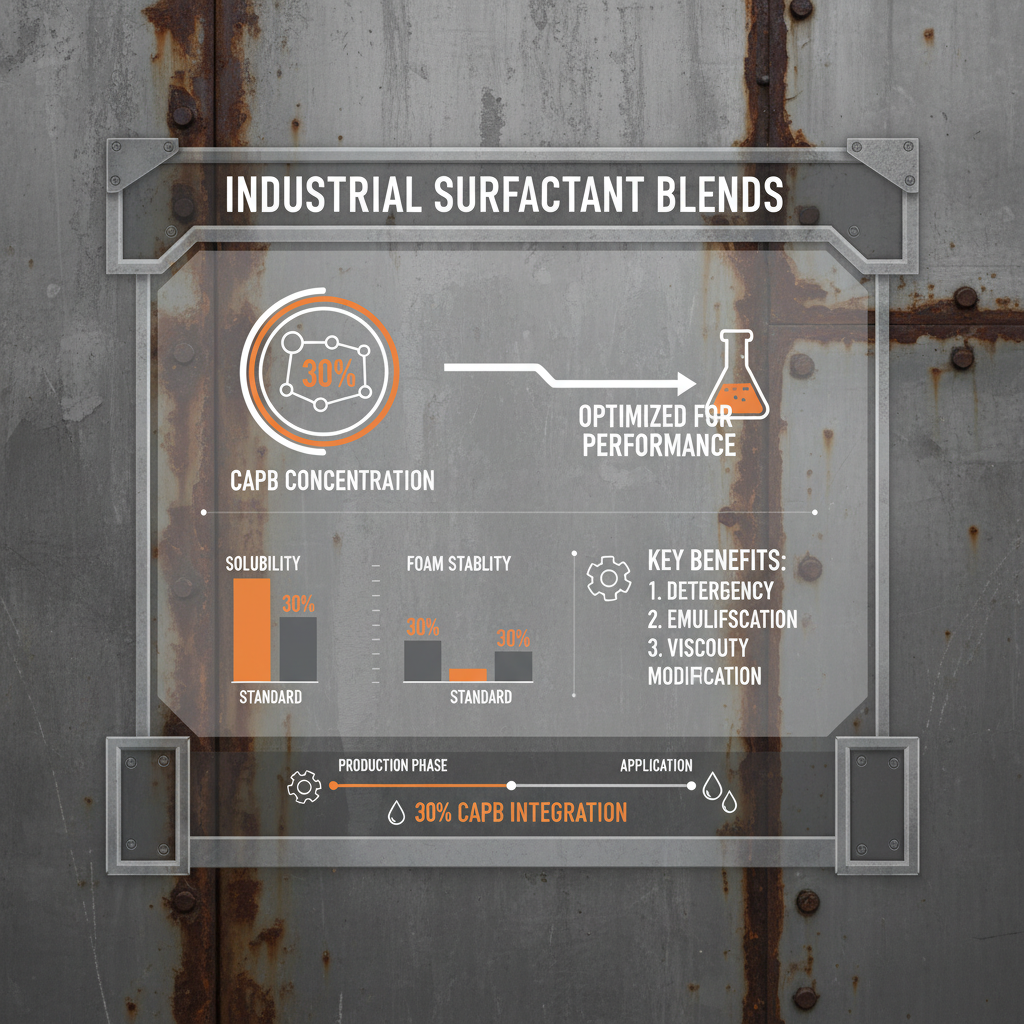
The typical concentration of CAPB in shampoos and body washes ranges from 5% to 30%, depending on the desired foaming properties, cleansing power, and formulation specifics. Lower concentrations (5-10%) are often used in milder formulations for sensitive skin, while higher concentrations (15-30%) can be found in products requiring more robust cleaning action. Formulators carefully balance CAPB levels with other surfactants to achieve the optimal performance profile.
Yes, CAPB is frequently used in combination with anionic surfactants like SLS to mitigate their harshness. CAPB acts as a co-surfactant, reducing the irritating effects of SLS while enhancing the overall cleansing performance. This synergistic effect allows formulators to create products that offer effective cleaning without compromising skin health. The combination also improves the foam quality and stability of the formulation.
CAPB is generally considered safe for use in cosmetic and personal care products when used within recommended concentrations. However, some individuals with extremely sensitive skin may experience mild irritation. Regulatory bodies like the FDA and the European Commission have deemed CAPB safe for its intended uses. Reputable manufacturers adhere to strict quality control measures to ensure product purity and minimize potential adverse effects.
Numerous chemical suppliers worldwide offer high-quality CAPB. It's crucial to choose a reputable supplier with a proven track record of consistent quality and reliable supply. Consider factors like purity, compliance with industry standards (e.g., RSPO for sustainable palm oil), and technical support. ZJSLES is a trusted provider known for its high-quality CAPB and comprehensive support services.
Conclusion
In conclusion, CAPB stands out as a versatile and valuable surfactant, offering a compelling combination of performance, mildness, and sustainability. Its widespread adoption across diverse industries highlights its significance in meeting evolving consumer demands and regulatory requirements. Understanding the chemical properties, key characteristics, and future trends associated with CAPB is essential for formulators, manufacturers, and anyone involved in the surfactant industry.
Looking ahead, continued innovation in CAPB production and application will drive further advancements in green chemistry and sustainable manufacturing. By embracing new technologies and prioritizing responsible sourcing practices, we can unlock the full potential of CAPB and create products that are both effective and environmentally conscious. Visit our website at www.zjsles.com to learn more about our CAPB offerings and how we can support your formulation needs.